

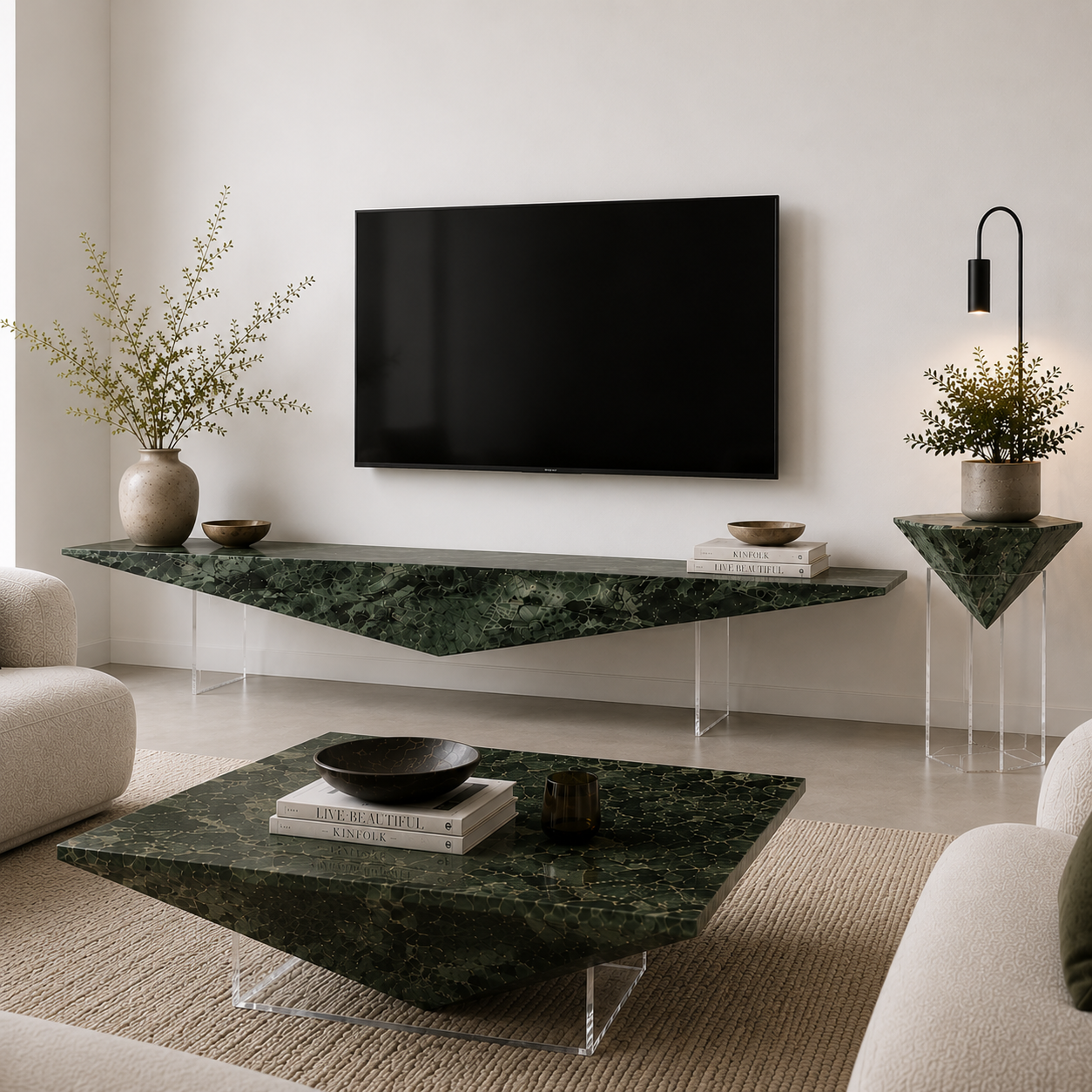
The dimensions tell you whether a piece will physically fit. They do not tell you how it will feel once it is in the room.
The furniture around it, the space needed for movement and the visual weight of the design all affect whether a piece works comfortably within a space.
Start with the footprint
Check the full width and depth of the furniture against the area where it will sit.
Marking the dimensions on the floor with masking tape is a useful way to see how much space a piece will actually occupy. This is particularly helpful with coffee tables and dining tables, where judging scale from a product image can be difficult.
Allow space around it
Furniture needs space beyond its own dimensions.
Dining chairs need room to pull away from the table, with additional clearance where people need to walk behind them. Coffee tables should sit within comfortable reach of the seating without restricting movement through the room.
For cabinets, sideboards and TV units, remember to account for doors and drawers where applicable.
Look at what is already in the room
A piece should make sense alongside the furniture around it.
A substantial sofa can accommodate a larger coffee table, while a more compact seating arrangement may work better with a smaller design.
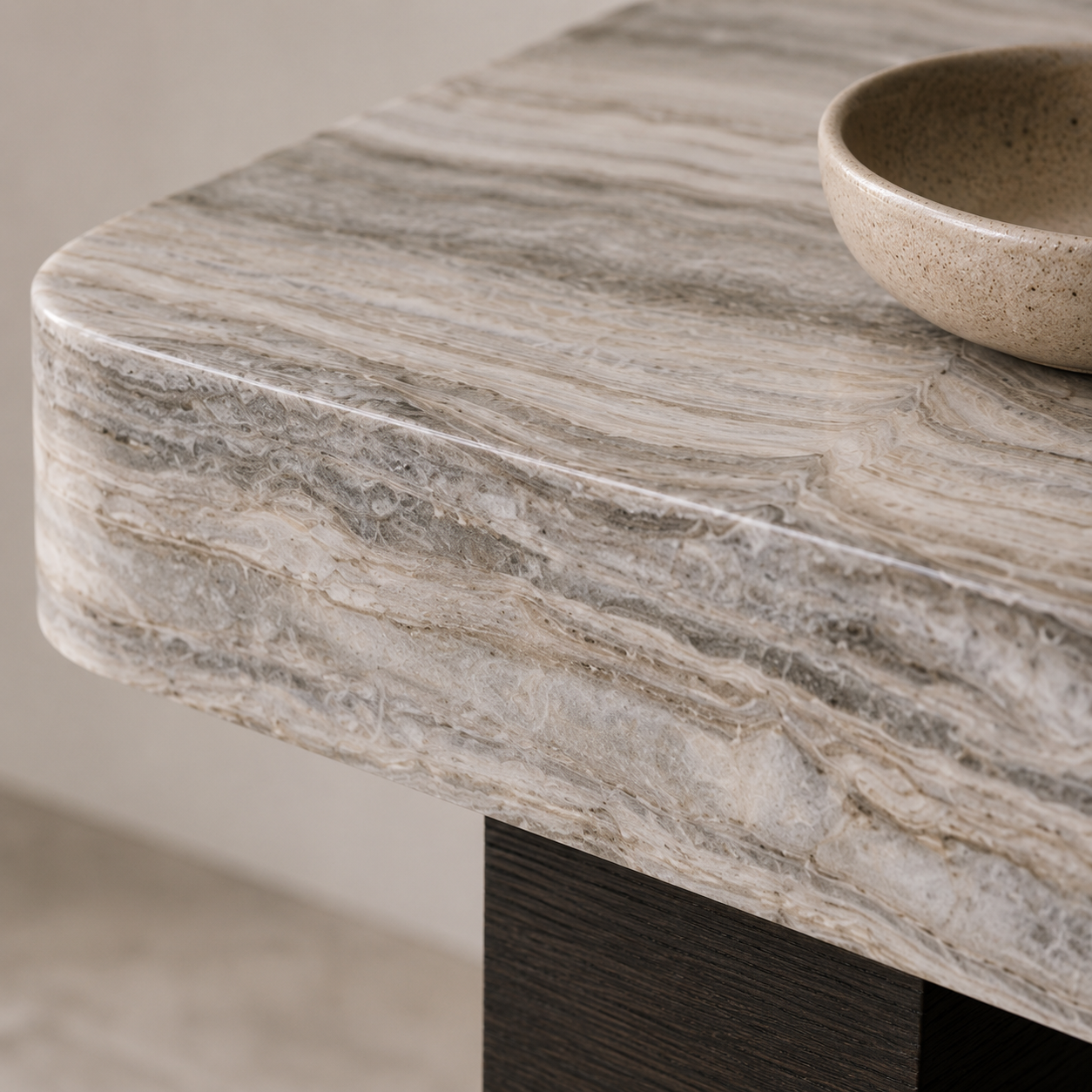
Material and construction matter too. A solid marble pedestal can have a stronger presence than an open or transparent base, even when the overall dimensions are similar.
Check the route in
For larger furniture, measure the route into the room as well as the room itself.
Doorways, hallways, staircases and tight turns should all be checked before ordering.
Taking these measurements beforehand gives you a much clearer idea of whether the furniture will work both in the room and on the way into it.

Leave a comment
This site is protected by hCaptcha and the hCaptcha Privacy Policy and Terms of Service apply.